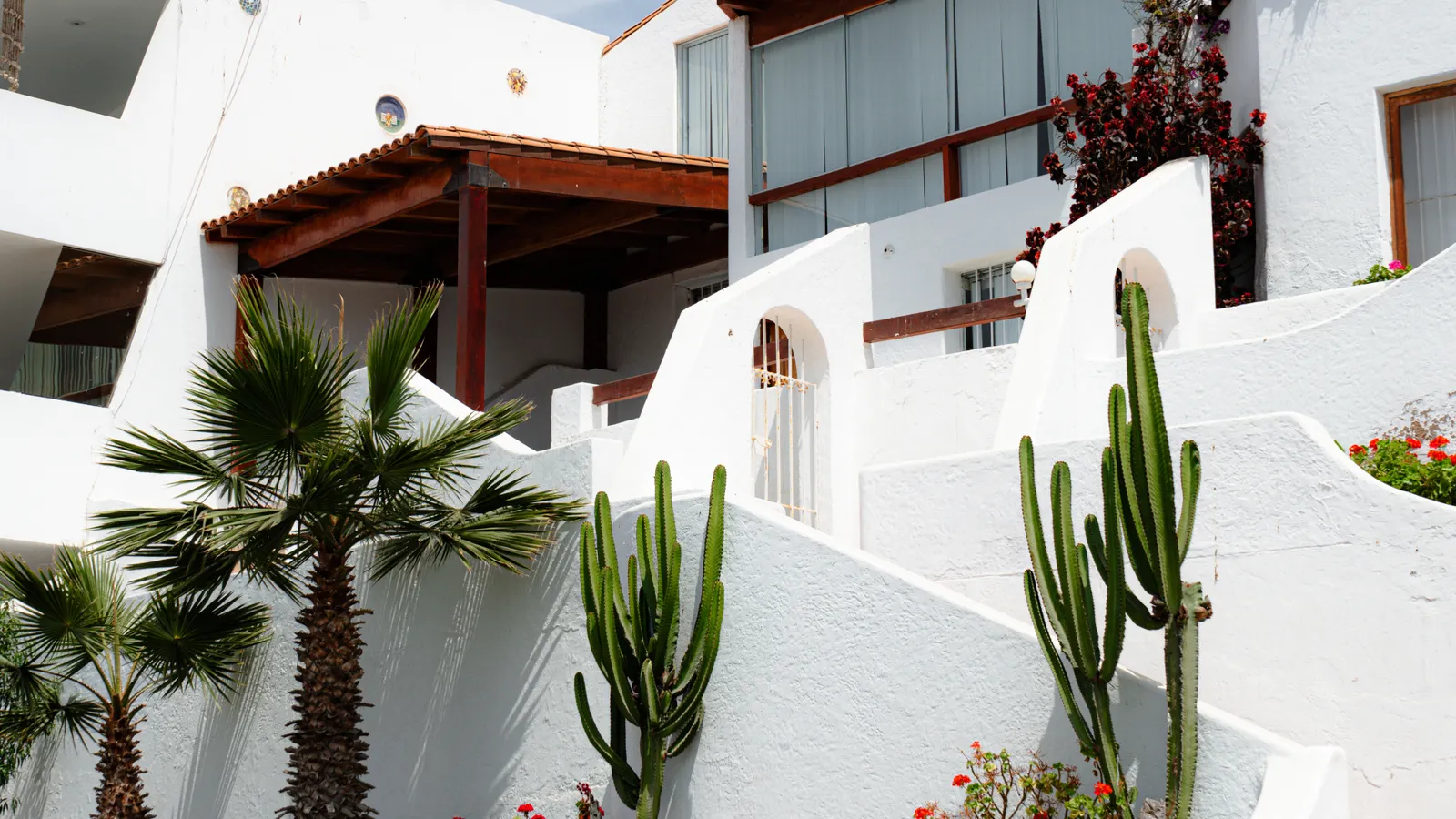
Las Torres de Cotillas is a municipality of around 22,000 people that grew enormously through the 1990s and 2000s: whole streets of terraced houses (adosados) and detached villas went up around the traditional centre, most with a garage, a patio and — very often — a private pool and a small garden. For an installer, that defines the daily workload: those homes are now twenty to thirty years old, exactly the age at which original bathrooms, kitchens, shower trays and taps all start demanding renewal at once.
The old town centre is a different world. Its traditional pueblo houses keep much older installations: original iron or early-plastic plumbing and electrical boards that pre-date Spain's 2002 wiring regulations, often without proper RCD protection or earthing. There, full renewals are the conversation. In the 1990s–2000s zones it's the opposite: the electrics are reasonably modern but were designed for a different era and now fall short. The typical job isn't a rewire — it's an expansion: more circuits, a board with more protections, a dedicated line for air conditioning or an EV charger.
The water, as across the whole Vega Media del Segura, is very hard. Limescale is the number-one cause of the hot-water faults we repair in Las Torres de Cotillas: water heaters running lukewarm, scaled-up elements, taps dripping before their time. And on plots bordering the Segura's huerta (the irrigated market gardens), the drains send their own warnings — roots in inspection chambers, leaking buried runs and blockages that keep coming back in the same spot.
Logistically we have an advantage: the municipality sits right next to Molina de Segura and Alguazas, where we have work every week, so there's rarely a day we don't pass through the area. We normally cover emergencies within 20–35 minutes depending on the time of day, and we batch scheduled jobs by day in the municipality, which lets us keep travel inside the quote rather than on top of it.