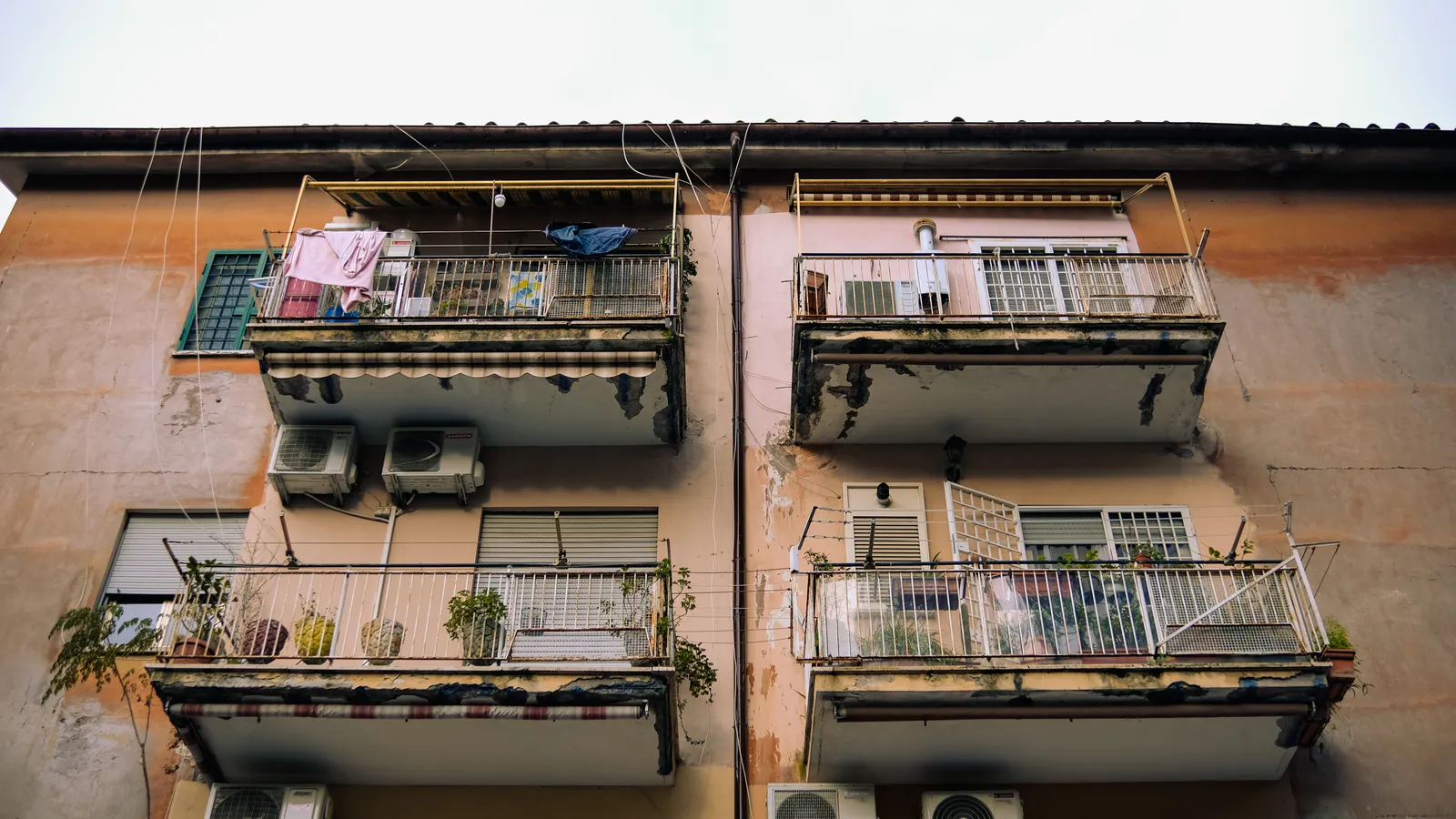
Alcantarilla is one of the most densely populated municipalities in Spain: around 42,000 residents packed into a small territory, with a compact grid-like town centre and almost no scattered housing. For an installer, that defines the daily work: apartment blocks from the 1960s–80s and traditional terraced town houses built wall-to-wall, many still running electrical installations that pre-date Spain's 2002 wiring regulations — boards without proper RCD protection, thin cable, rooms without earth — and original iron plumbing well past its useful life.
Those party-wall houses are what most sets Alcantarilla apart from other towns we cover. They share walls — and often very old stretches of drainage — with the house next door, so a leak can surface as a stain on the neighbour's wall and a blockage can start two doors down. Working here means diagnosing calmly before opening anything up, coordinating with adjoining owners when needed, and protecting access carefully, because on many old-town streets the materials sit right at the front door.
The other local quirk comes from the huerta — Murcia's historic irrigated market-garden plain. Alcantarilla stands on that huerta and its network of acequias (irrigation channels); it's no coincidence the town hosts the Museo de la Huerta and its famous noria waterwheel. On the oldest streets, that translates into ground floors with rising damp and into very old drain connections. Working out whether a stain is a leak, condensation or moisture from the ground is half the solution — and it's a question we answer here constantly.
The water, as across the whole area, is very hard: limescale is the number-one cause of the hot-water faults we repair in the municipality. Logistically, Alcantarilla is comfortable ground for us: emergencies usually within 15–25 minutes, scheduled work batched by day, and frequent jobs in shops and private garages (cocheras) — a very common type of client in a town with this much street commerce and working industrial estates right next door.