
Certificate issue (CIE)
We draw up and sign the Electrical Installation Certificate as authorised installers, with all the technical detail the regulations require.
We issue the electrical certificate (boletín / CIE) in Murcia, signed by an authorised installer and registered with Industria, so you can connect a new supply, change your power rating or get your installation legalised.
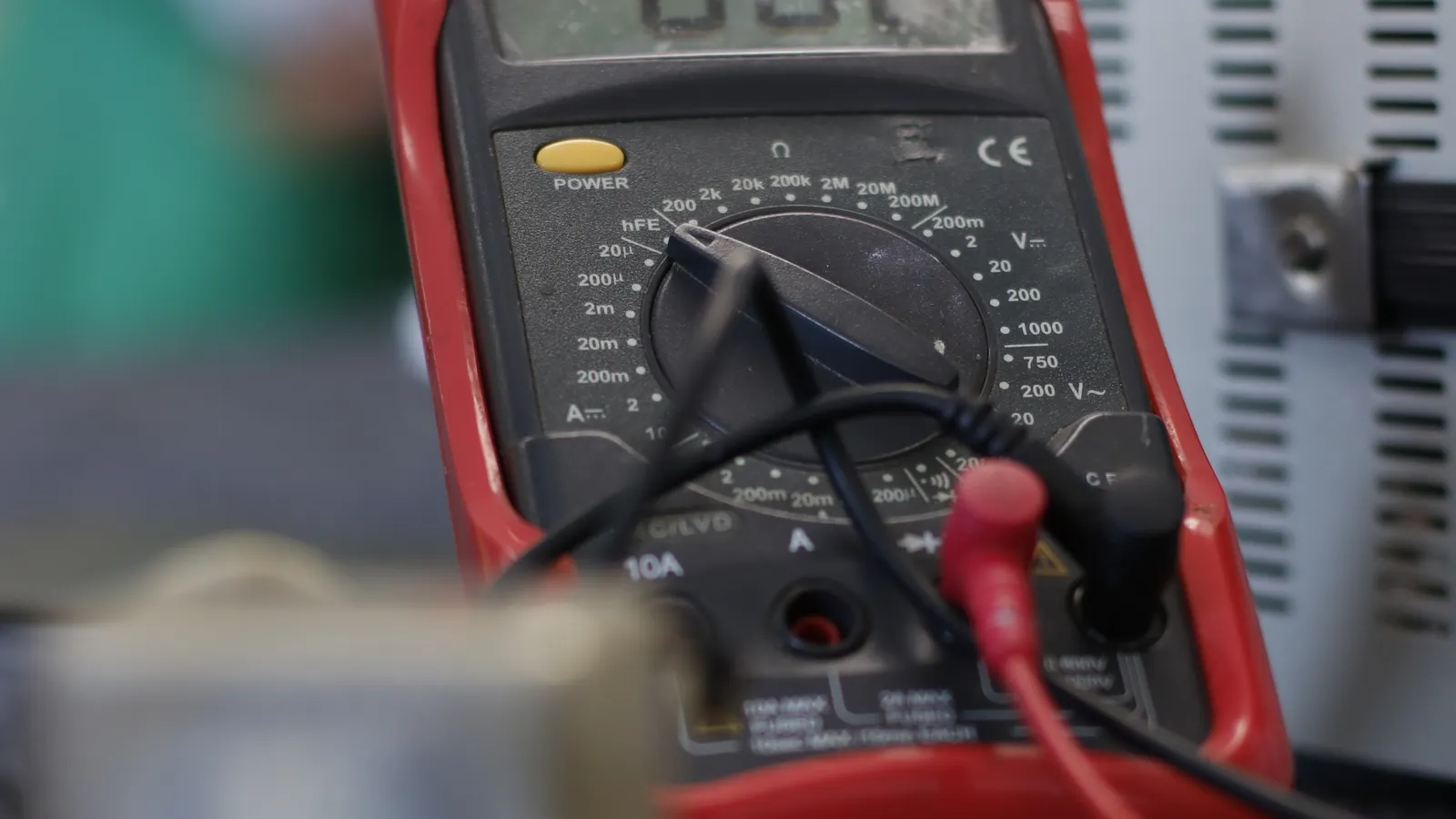
The boletín eléctrico — officially the Certificado de Instalación Eléctrica, or CIE — is the certificate that proves a property's electrical installation meets Spain's low-voltage regulations. Only an authorised installer can sign one, and it must be registered with the industry department of the Region of Murcia. It's the piece of paper your electricity company will ask for before activating or changing a supply — and until they have it, the process simply stalls, however many times you call.
If you've recently bought a property in Spain, this is often the first piece of Spanish utility bureaucracy you meet. You'll need a boletín to connect electricity in a home with no active contract, to raise your contracted power beyond what your registered installation supports, to reconnect a supply that has been cut off for a long time, and usually when opening or refurbishing business premises. As authorised electricians in Murcia we handle the whole thing: we inspect the installation, fix whatever needs fixing, then issue and register the certificate, ready for your supplier.
We work across Murcia city, its pedanías and the metropolitan area. On this page: exactly when a boletín is required, how the process works step by step, the pitfalls that catch out buyers of older properties, what it costs — the CIE is one of the few fixed prices on this site — and a plain-English glossary of the Spanish terms you'll run into.
We draw up and sign the Electrical Installation Certificate as authorised installers, with all the technical detail the regulations require.
We provide the certificate needed to connect electricity in new properties or those with no previous contract, ready to hand to your supplier.
We issue the certificate to raise or lower your contracted power when the installation calls for it, including any prior work needed.
Certificates for shops, offices and business openings, matched to the use and power your activity actually needs.
We check the consumer unit, protections, earthing and circuits to confirm everything complies before we certify.
We handle the admin and register the certificate with Industria, so all you have to do is pass it to your supplier.
The question we're asked most isn't what a boletín is — it's whether you need one in your particular situation. These are the five scenarios we see most in Murcia, including the ones where the honest answer is 'the utility decides'.
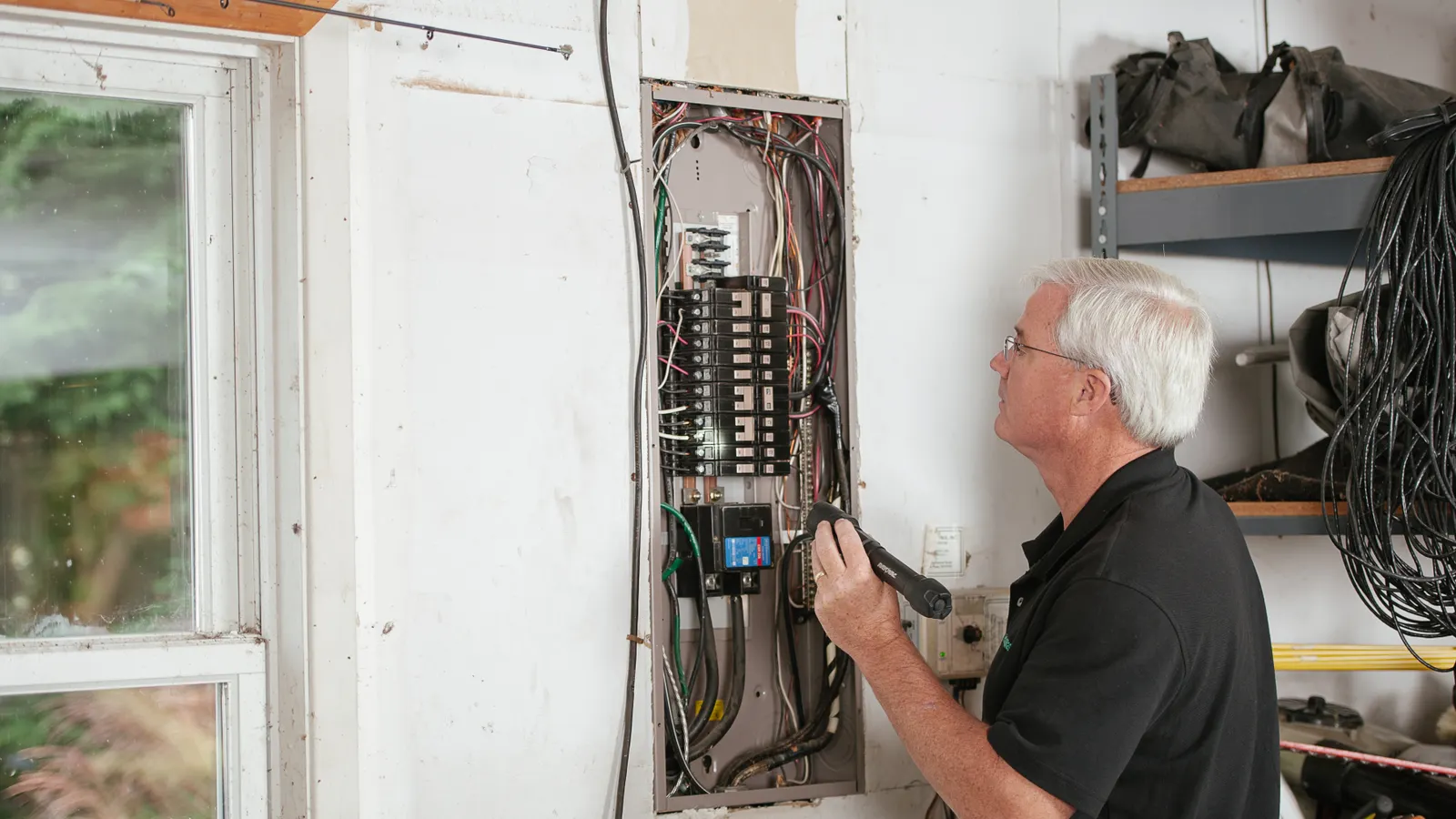
This is the clear-cut case. If the property is new, has never had a contract, or the previous contract was cancelled, your supplier will ask for a valid CIE before processing the connection — the alta de luz. Without a registered certificate, the application simply doesn't move. If you've just bought or rented a place with no power, this is usually the first real piece of paperwork to solve, and it pays to start early: everything else waits behind it.
Small power changes usually go through without extra paperwork, but beyond a certain point the distribution company requires a boletín proving your installation can handle the new rating. The exact threshold depends on what's on record for your property and on the company's own criteria — so don't trust generic figures from the internet. When you request the change, the utility itself will tell you whether a new CIE is needed. If it is, we check first that your installation is genuinely up to it.
When a property has been without electricity for a long period — because the contract was cancelled or the supply cut — the distributor may demand a fresh boletín before reconnecting, since the old one no longer tells them anything reliable about the installation's current state. How long counts as 'long' is applied case by case; it's usually a matter of years, but the company decides. If you've been asked for one to reconnect, our pre-check stops the process stalling twice.
Converting commercial premises into a home, a home into a professional office, or bringing an installation that was modified informally years ago back inside the rules — all of these require a boletín matching the property's actual use. It's also the route to legalise older installations that were never properly registered. These cases usually involve extra technical documentation, so it's worth assessing before touching anything: after the first visit we'll tell you exactly what your case involves and in what order to do it.
There's no blanket rule forcing a new boletín just because a property changes hands: if the supply is active and you're only changing the account holder, you generally won't be asked for one. But if the home is old, the contract lapsed, or you want more power when you move in, the distributor will very likely demand a new CIE. Our honest advice for buyers: have the installation checked before completing the purchase — knowing whether certification will cost a little or a lot is worth real money at the negotiating table.
A boletín isn't a form someone signs blind — it certifies that your installation complies. That's why our process always starts with actually looking at it. Here's the full journey, from your call to a registered certificate.
Before committing to anything we visit the property and inspect the installation. That's the difference between a serious certificate and a future problem: a boletín signed over a non-compliant installation can be rejected, and it leaves the installer — and you — badly exposed. The pre-check lets us tell you with certainty whether the installation can be certified as it stands, or exactly what needs correcting first, with a fixed price for each item.
We measure the earth connection and confirm it reaches the points it should; we verify the consumer unit has a working RCD and correctly rated breakers, and test that they trip; we check cable cross-sections against the power to be certified; and we review the general condition of sockets, switches, the supply line and the main protection box. It isn't a cosmetic once-over — these are the same instrument-backed checks that later stand behind our signature.
In flats wired before the current regulations, the same suspects turn up again and again: boards without an RCD or with obsolete protection, no earth in part of the home, cable sections marginal for today's loads, and worn-out fittings. Often, sorting the board and the earthing is enough to certify; sometimes a circuit or two needs renewing as well. We put the options in writing — from the minimum correction to a staged rewire — and you decide.
Once the installation is in order, we draw up the certificate with its technical data — maximum admissible power, protection devices, cable sections — and sign it as authorised installers. We then file it electronically with the industry department of the Region of Murcia, which is what turns it into an official, valid document. That step is ours, not yours: no wrestling with Spanish government websites and no queuing at an office with a numbered ticket.
If the installation is in good shape, a few working days usually separate the visit from the registered certificate. If corrections are needed, the timescale depends on their scope and we put it in writing before starting. At the end you receive the registered CIE — the document your supplier needs — plus clear instructions on what to do with it so your connection or power change doesn't stall. Keep it safe: it's the reference document for your installation and you may be asked for it again years later.
After a lot of certificates across Murcia, these are the tangles that come up most — and most of them can be avoided by knowing a couple of things in advance. Especially relevant if you're new to how Spanish utilities work.

The classic: you buy a 1960s or 70s flat, go to set up electricity, and discover you need a certificate the installation, as it stands, cannot pass. Don't panic — and don't get talked into a full rewire on the spot: often a sensible adaptation — a new board, earthing, a circuit or two — is enough to certify, and the rest of the renewal can be planned in stages. We start with the pre-check and build a realistic, costed plan from there.
Buying or renting a home whose electricity was cut over the previous occupant's debt causes more worry than it should: the debt belongs to whoever ran it up, not to you. The practical snag is the cut itself — if the contract was terminated, you'll need a brand-new connection and, with it, quite possibly a boletín. Each company handles these cases its own way; we take care of the technical side so that when the paperwork unblocks, the installation isn't what's holding things up.
A boletín can be rejected over data errors — a wrong power figure, CUPS or an address that doesn't match what's on record — or, worse, because the installation doesn't match what was certified. The first kind is fixed quickly with a corrected filing; the second is the bill for hiring someone who signed without looking. If you're coming to us after a rejection elsewhere, we work out what happened, fix the real cause and resubmit. It's more common than you'd think, and almost always solvable.
You pay for contracted power every month whether you use it or not, so over-sizing it 'just in case' is expensive. As a general guide, a small flat with modest appliances needs less than a house running an induction hob, air conditioning and an electric water heater at the same time. The right figure depends on your appliances and habits — not on a generic table — and changing it later is straightforward if the installation supports it. During the pre-check we'll help you work it out properly.
The comercializadora is the retailer — the company you sign with and who bills you. You choose it and can switch freely. The distribuidora owns the wires and the meter — across most of the Region of Murcia that's i-DE, part of the Iberdrola group — and you don't choose it; it comes with the territory. Your boletín ultimately ends up with the distributor, even though you hand it to your retailer. Knowing the difference saves hours of phone calls to the wrong company when something stalls.
Message us on WhatsApp and let us know if it's a new connection, a power change or a business opening. We'll point you in the right direction straight away.
We visit the property and check the state of the electrical installation to confirm it can be certified.
If anything falls short, we explain what needs putting right and sort it before signing anything.
We sign the certificate, register it with Industria and hand it over ready for your energy supplier.
Unlike almost everything else on this site, the certificate for a standard home has a fixed price: €300, with the pre-check of the installation included. It's a well-defined job, and we'd rather you knew the figure before calling.
What does vary is the cost of corrections, if your installation needs work before it can be certified — replacing an RCD is not the same as re-earthing half a home. That's what the pre-check is for: it produces a written, itemised quote, and you decide with the numbers in front of you.
For shops and businesses the price depends on floor area, power and the nature of the activity, so we always quote after a visit. No obligation and no surprises: the price you sign is the price you pay.
The CIE for a standard home is one of the few fixed prices on this site, because it's a well-defined job. Everything else depends on the state of each installation, so treat those figures as starting points.
| Job | Guide price | Detail |
|---|---|---|
| Electrical certificate (CIE) — home | €300 | Fixed price, pre-check of the installation included |
| Stand-alone pre-check visit | from €35 | Deducted if you then commission the certificate from us |
| Replace a socket or switch | from €30 | Standard fitting included |
| Replace an RCD or circuit breaker | from €60 | Standard protection device included |
| Minor corrections — labour | €50 call-out + 1st hour | Small repairs picked up during the pre-check |
| Full adaptation of an old installation | fixed itemised quote | Priced after the pre-check; can be done in stages |
| Certificate for business premises | depends on power and use | Quoted after a visit to the premises |
Apart from the fixed CIE price for homes, all figures are guide 'from' prices excluding VAT. The exact cost of any correction comes as a free written quote after the pre-check — no obligation.
You don't need to learn Spanish electrical law — that's our job — but these four points help you understand what's being signed, and spot anyone who shouldn't be signing it.
Spain's low-voltage regulations — the REBT, in force since 2002 — set the minimum safety requirements for installations: protection devices, cable sections, earthing, and the number of circuits a home needs for its level of electrification. The boletín certifies that your installation meets that standard. That's why a pre-2002 installation can't simply be certified 'as is' if it falls short: first it's brought up to the minimums, then the certificate is signed.
Only an authorised electrical installer — a person or company registered as such with the industry authority — can issue a valid CIE. That's protection for you: the signature makes the installer answerable for what's certified. Be wary of certificates offered 'over the phone' or without a visit; besides being bad practice, a certificate that doesn't reflect reality can be rejected and cause you a bigger problem than the one you were trying to solve.
A signed but unregistered CIE is of no practical use: its validity comes from being filed with the regional industry authority of the Region of Murcia. Once registered, it becomes the reference document for your installation, and utilities consult it for connections and changes. It carries no printed expiry date, but the distributor can treat it as outdated if the installation is very old or has been altered — which is why they sometimes demand a new one.
For an ordinary home, the installer-issued CIE is normally all that's required. Larger or special installations — higher power ratings, premises open to the public, pools, certain commercial uses — may additionally need an inspection by an OCA, an independent authorised inspection body. If your case might fall into that territory, we tell you at the first visit, so the budget and the timescales account for it from day one.
The electrical certificate, or Certificado de Instalación Eléctrica (CIE), is the official document confirming that an installation meets current regulations. Electricity companies require it to connect or reactivate a supply.
It's usually required when setting up power in a new property, reactivating a disconnected supply, increasing your contracted power, or after renovating the installation. If you're unsure about your situation, just ask.
The certificate has a fixed price of €300 for a standard home, with the pre-check of the installation included. If the installation needs corrections first, we tell you with a separate quote before touching anything.
We normally issue the certificate within 24–72 hours of inspecting the installation, unless faults are found that must be corrected first.
Only a registered, authorised electrician can issue a valid electrical certificate. We are — so we can inspect, certify and process your certificate.
You get a clear list of the faults with a fixed quote to correct them — usually board protections or earthing. Our electricians carry out the adaptation and, where possible, we issue the certificate in the same visit.
The words you'll meet in any Spanish electricity paperwork, each explained in a sentence. Worth skimming before you phone any utility.
WhatsApp us on +34 613 364 465 and we'll tell you straight away what you need to connect your supply, change your power or certify your premises.